Why the Base Matters More Than the Surface
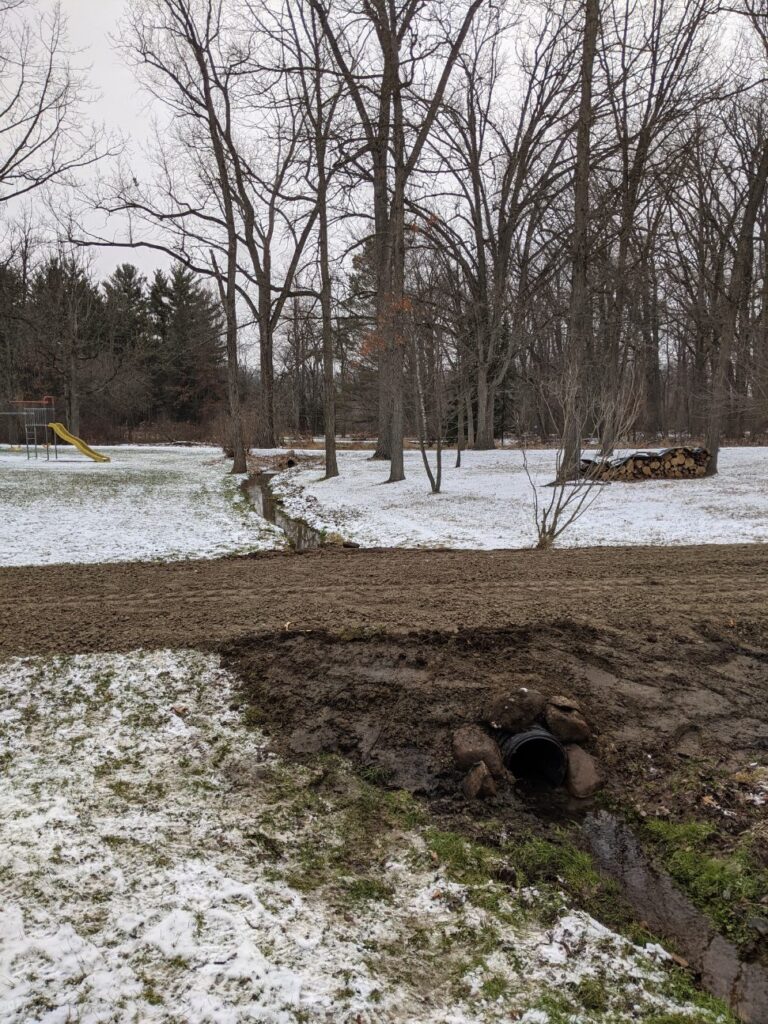
Most people judge a driveway by the part they can see — the stone, the millings, the finish. But the part that decides whether it lasts is the part nobody ever looks at: the base under it. John has rebuilt enough failed driveways around Genesee and Livingston County to say it plainly. A good driveway starts with a good base. Skip that, and the nicest surface in the world ruts, puddles, and breaks apart within a season or two.
What the base actually does
The base is the compacted layer of aggregate that sits between native ground and your finished surface. Its job is to spread the weight of every vehicle out over a wide area so the soft soil underneath never feels the full load of a tire or an axle. It also gives water a path to drain instead of sitting and softening the ground.
When the base is built right, the surface above it has something solid and stable to ride on. When it isn't, the surface flexes with every pass, the soft spots compress unevenly, and you get the ruts, dips, and puddles that send people looking for a contractor.
Why our soil makes the base critical
Michigan ground around Fenton is clay-heavy, and clay holds water. Water that sits will freeze, expand, and lift — then thaw and drop everything back down unevenly. That freeze-thaw cycle runs all winter, and it's brutal on anything built on a weak foundation.
A proper base defends against this in a few ways:
- It's excavated down to firm ground, removing the soft topsoil and organic material that compress and rot.
- It's built up in compacted lifts so it carries load without shifting.
- It drains, so water moves through and away instead of pooling and freezing.
- It's deep enough for the traffic it carries — a drive that sees trailers and trucks needs more than one that sees a sedan.
Build all that in, and the freeze-thaw cycle has far less to grab onto. Skip it, and winter finds every weak spot you left behind.
What a base done right looks like
On our jobs the surface goes down last and fastest. Most of the work — and most of the value — is below it:
- Excavation to firm ground, clearing soft soil and organics.
- Geotextile fabric where the subgrade is soft or wet, to keep base stone from sinking into mud.
- Aggregate in lifts, each one compacted before the next goes on.
- Grade and pitch built into the base so water sheds before the surface even goes down.
None of that shows in a photo. All of it shows in how the driveway holds up five winters later. That's why we don't rush the parts you can't see — doing them right the first time is cheaper than redoing a surface that was built on a shortcut.
Frequently asked
Can't I just add more stone on top of a bad driveway?
You can add stone, and it'll look better for a while, but if the base underneath is failing the new material will rut right along with the old. Fresh top layers buy time on a sound base; they don't fix a bad one.
How do I know if my base is the problem?
Recurring ruts in the same spots, puddles that come back after every rain, and a surface that feels soft or spongy under tires usually point to a base issue rather than a surface one. John can tell on a walk-through.
Is a thicker base always better?
Up to a point. The right depth depends on your soil and traffic — over-building wastes money, under-building fails early. Matching depth to use is part of what the estimate sorts out.
Does the base matter for millings and stone equally?
Yes. The surface choice barely matters next to the base. Both stone and millings need the same compacted, draining foundation to last.