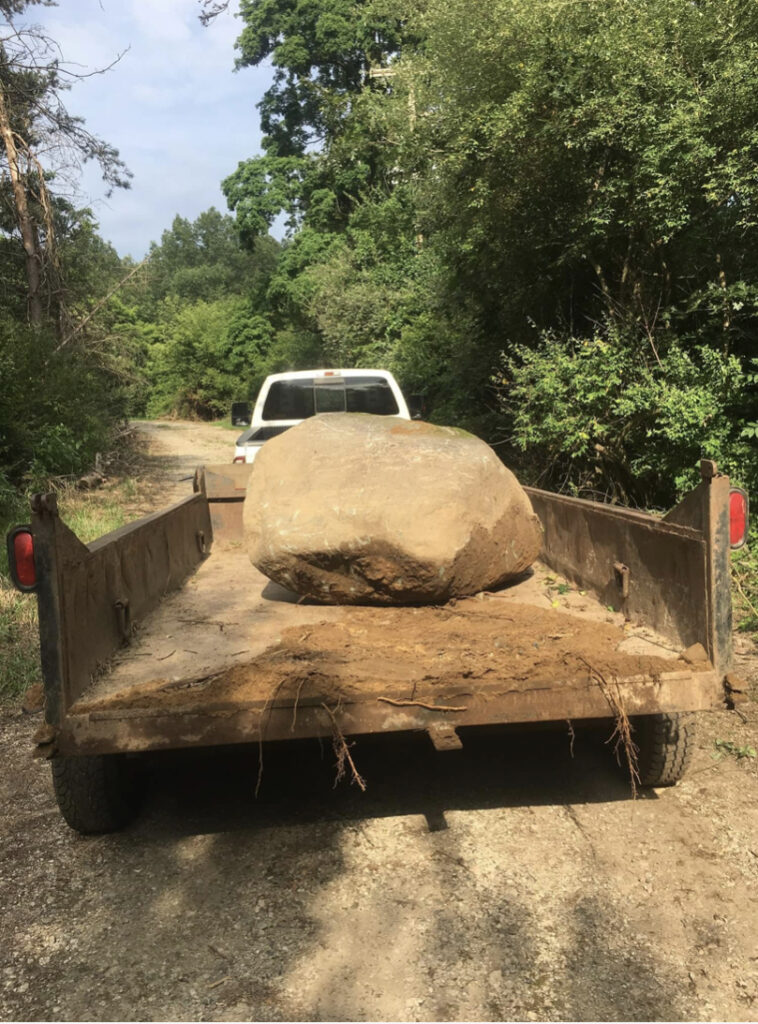
Rock Solid Excavation builds retaining walls that do real work — sea walls along the water, natural stone walls, and high-format engineered block for serious load and elevation change. A wall holds back a hillside, protects a shoreline, stops erosion, or turns a useless slope into usable space. Get the drainage and structure right and it lasts; get them wrong and Michigan freeze-thaw takes it apart. Freeze, thaw, repeat — built to take it.
Types of Walls We Build
Different jobs call for different walls. We match the wall to the load, the elevation change, and the setting — whether that's a lakefront edge taking wave and ice or a backyard slope you want to flatten out into usable ground.
- Sea walls along lakes and shorelines
- Natural stone walls
- High-format engineered block for heavy load and big elevation change
- Walls to hold back hillsides and slopes
- Erosion control and shoreline protection
- Turning slopes into level, usable space
Why They Last in Michigan
A retaining wall doesn't fail because of what's in front of it — it fails because of the water behind it. When water builds up behind a wall and freezes, the pressure pushes the wall out, bows it, and cracks it apart. So we build drainage into every wall: the right backfill, drainage behind the face, and a base that won't shift with frost. Combined with proper structure for the load, that's what keeps a wall standing through our winters.
- Drainage built in behind the wall to relieve water pressure
- Proper backfill and base to resist frost heave
- Structural design matched to the load and elevation change
- Shoreline walls built for wave action and winter ice
Shorelines and Slopes
On the water, a sea wall protects your bank from being chewed away by wave and ice, and it gives a beach or lawn a stable edge to sit against. On land, a retaining wall turns a slope you can't use into level ground you can — extra yard, a patio area, or a driveway that needed the elevation handled. John will walk the site and tell you straight what the situation calls for.
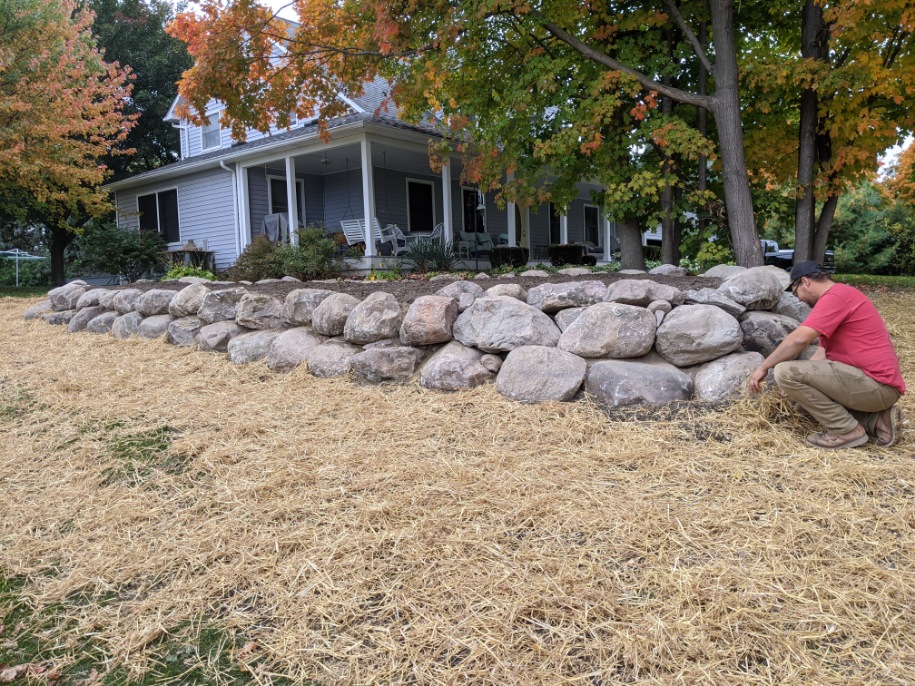
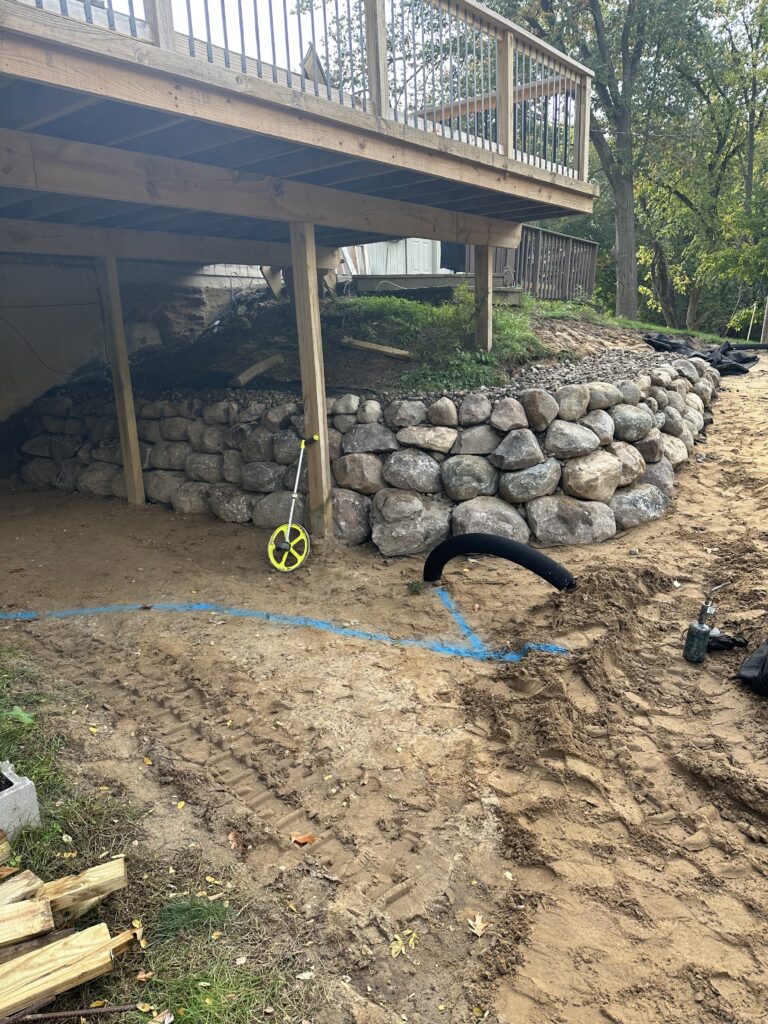
Retaining Walls in the field
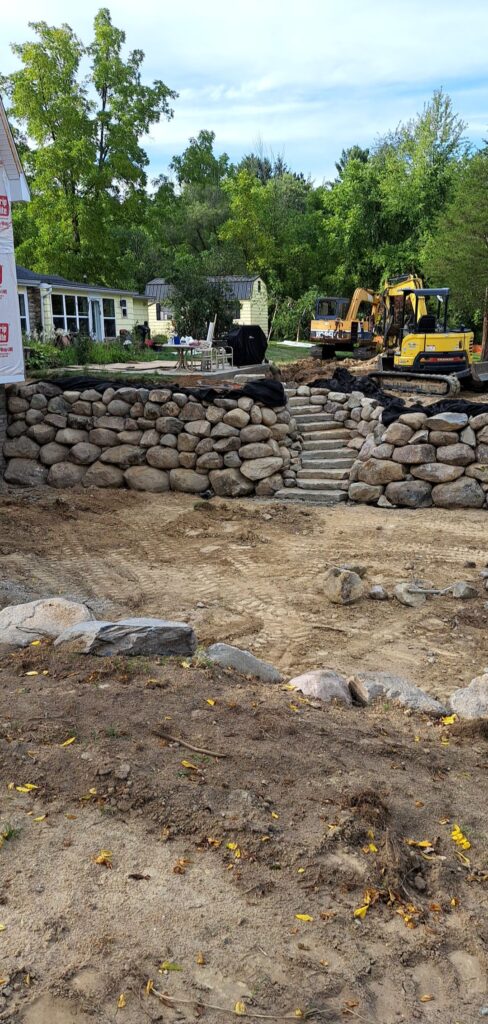
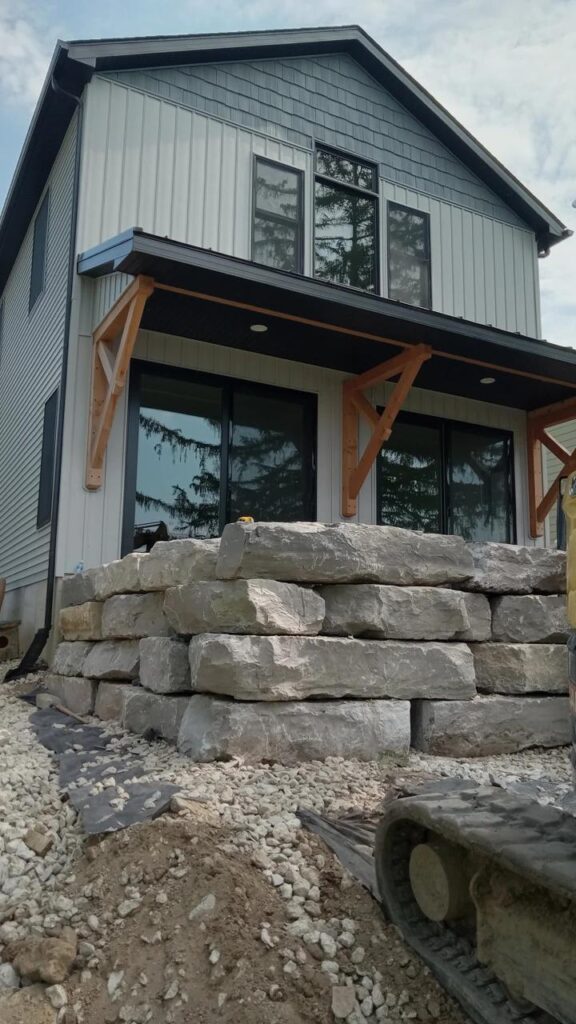
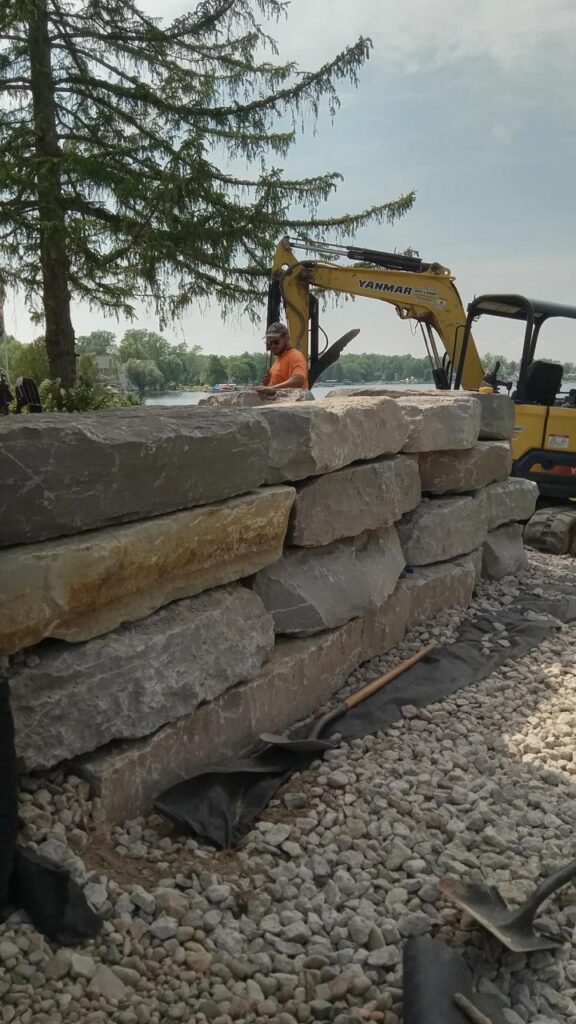
Frequently asked
Why do retaining walls fail?
Almost always it's water and drainage. When water collects behind a wall and freezes, it pushes the wall out and cracks it. We build drainage behind every wall and set it on a frost-stable base, which is what prevents that failure.
What kind of wall do I need?
It depends on the load, the height of the elevation change, and the setting. Natural stone suits some jobs, high-format engineered block handles serious load, and shorelines need a sea wall built for wave and ice. John will assess your site and recommend the right build.
Can a retaining wall give me more usable yard?
Yes. Holding back a slope with a wall flattens out ground you couldn't use before, opening it up for lawn, a patio, or a driveway. It's one of the most common reasons people build one.
What areas do you serve?
We're based in Fenton and serve Genesee, Oakland, Livingston, and Washtenaw County, including Fenton, Linden, Holly, Hartland, Howell, Brighton, Milford, South Lyon, and the lake communities nearby.