
Rock Solid Excavation builds driveways that shed water and stay put, and we handle the earthwork that goes with them — foundation pads, general earth moving, and precision grading for residential and commercial sites. A driveway is only as good as the base under it and the slope built into it. We get both right so it holds up through Michigan freeze-thaw, heavy rain, and clay-soil heave. Freeze, thaw, repeat — built to take it.
Driveways and Surfaces
We build crushed-stone and asphalt-millings driveways that drain well and wear hard. Both are practical, durable surfaces for our climate when they're laid over a proper base and graded to move water off the surface instead of letting it pond and freeze.
- Asphalt-millings driveways
- Crushed-stone driveways
- New driveways and rebuilds of failed surfaces
- Proper sub-base prep and compaction
- Surface slope built in to shed water
- Residential and commercial sites
Earthwork and Precision Grading
Beyond driveways, we move dirt and shape grade where it counts. That means building level, compacted foundation pads for new structures, cutting and filling to set the right elevations, and fine grading so water runs away from buildings and low spots instead of toward them.
- Foundation and building pads
- Cut-and-fill and rough grading
- Precision fine grading
- Drainage-driven grading to move water off the site
- General earth moving for residential and commercial projects
Why Base and Slope Matter Here
Michigan clay holds water, and water that sits will freeze, lift, and break apart anything above it. A driveway or pad set on a weak base shifts and ruts within a season or two. We dig to the right depth, build and compact the base, and pitch the surface so runoff sheds instead of pooling. That's the difference between a surface that lasts and one that fails the first hard winter.
- Excavation to the right depth before any material goes down
- A compacted aggregate base that won't shift under load
- Surface pitch that moves water off instead of letting it pond
- Materials and depths matched to traffic and use
What to Expect
Every job starts with John walking the site to see how the ground sits, where water moves, and what the surface needs to handle. From there you get a written estimate and a clear plan. On the work itself, we don't skip the parts you can't see once it's done — the excavation, the base, and the compaction are where a driveway or pad either earns its life or starts failing early. Doing those right the first time is cheaper than redoing a surface that was rushed.
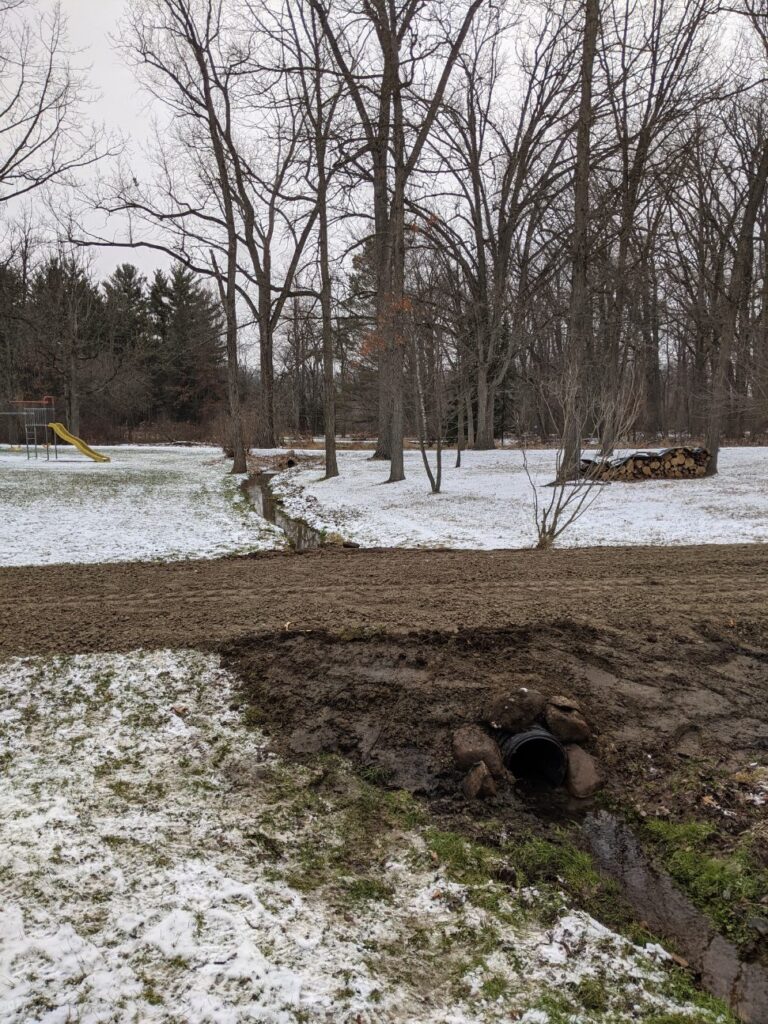
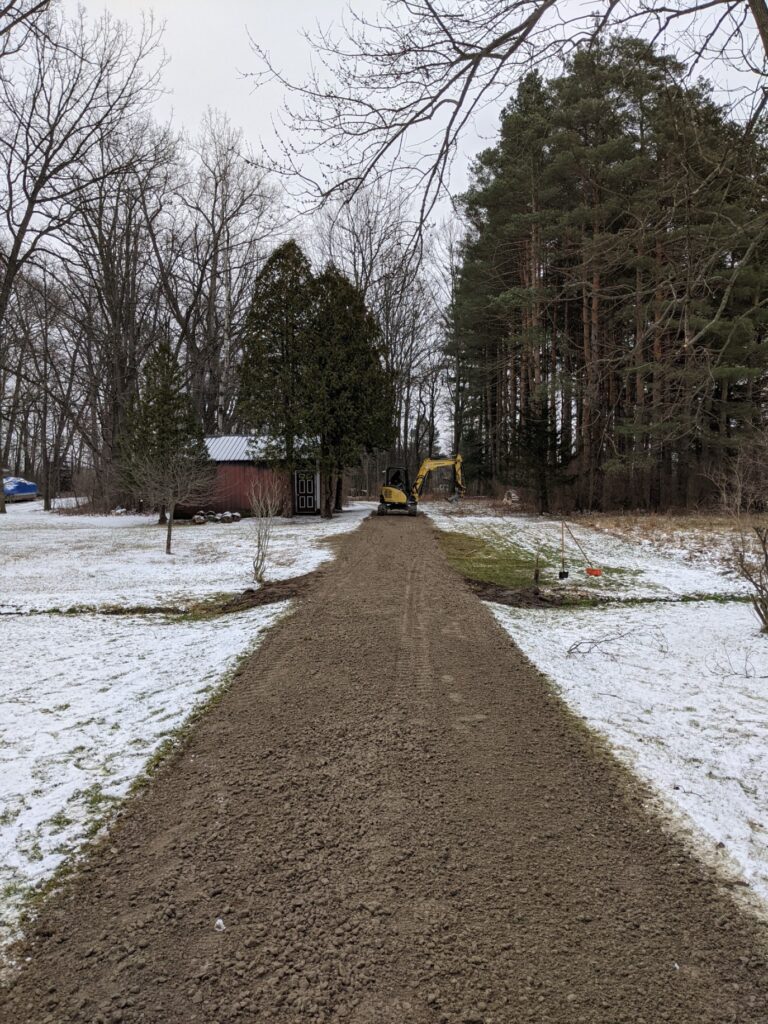
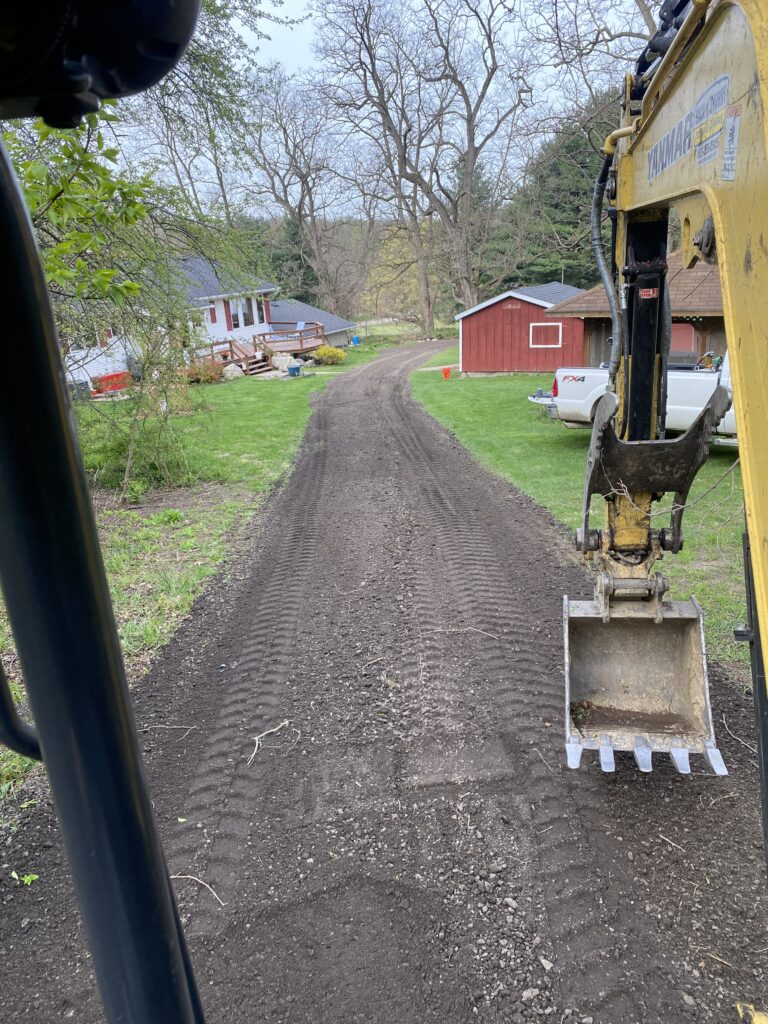
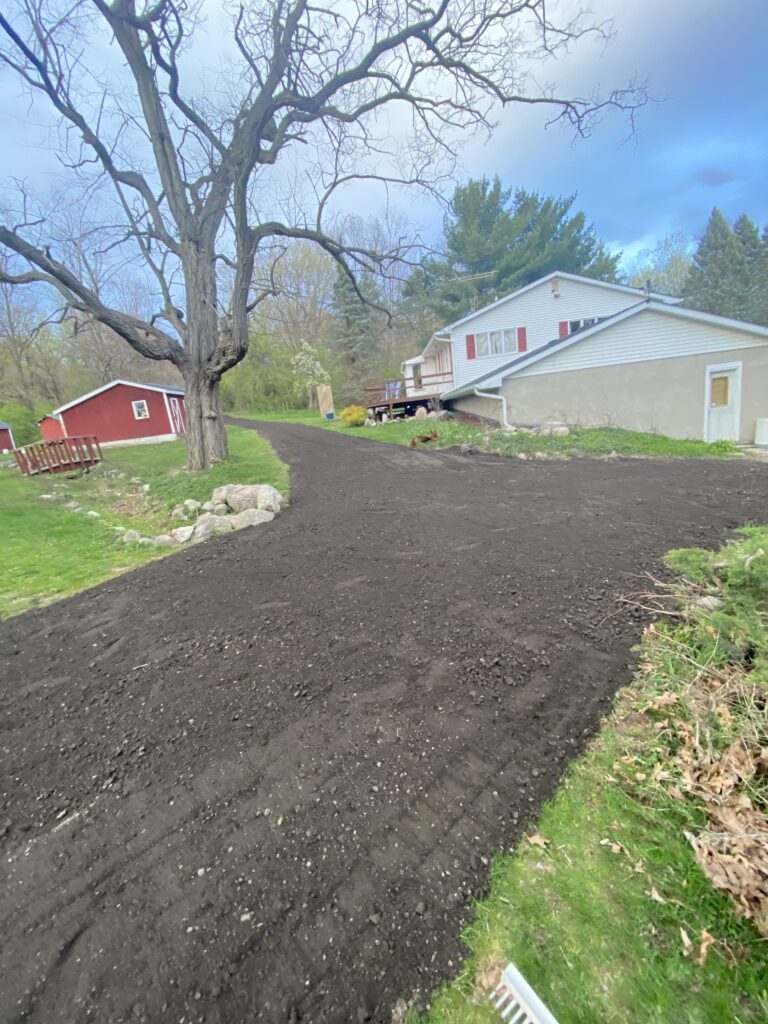
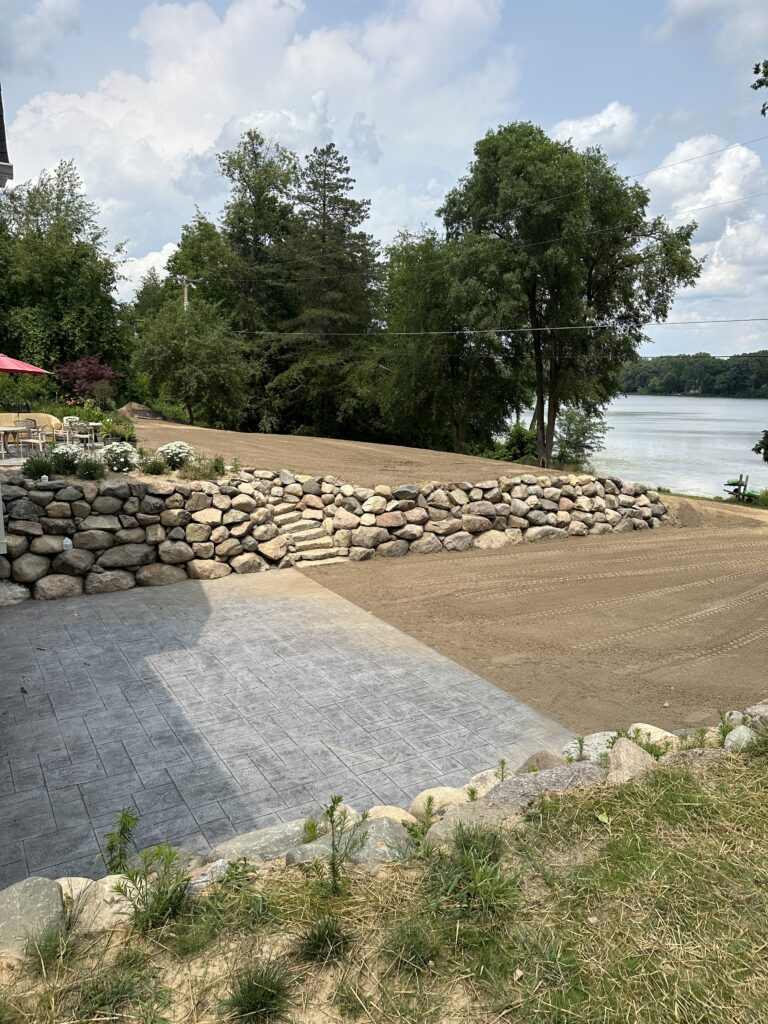
Driveways & Grading in the field
Frequently asked
Crushed stone or asphalt millings — which is better?
Both make durable, water-shedding driveways when laid over a proper base. Millings pack down into a firmer, more paved-like surface, while crushed stone is a clean, classic look. John will recommend the right fit for your site, traffic, and budget during the walk-through.
Why does my driveway keep rutting or holding puddles?
Usually it's the base and the slope. A driveway built on weak or uncompacted ground ruts under traffic, and one without proper pitch holds water that freezes and breaks it up. Rebuilding with a compacted base and correct slope solves both.
Can you grade a pad for a new building or addition?
Yes. We build level, compacted foundation and building pads and handle the cut-and-fill and fine grading to set the right elevations for new structures, residential or commercial.
What areas do you serve?
We're based in Fenton and serve Genesee, Oakland, Livingston, and Washtenaw County, including Flint, Grand Blanc, Linden, Holly, Hartland, Howell, Brighton, Milford, South Lyon, Novi, and the surrounding area.