What a Perc Test and Soil Test Tell You About Your Property
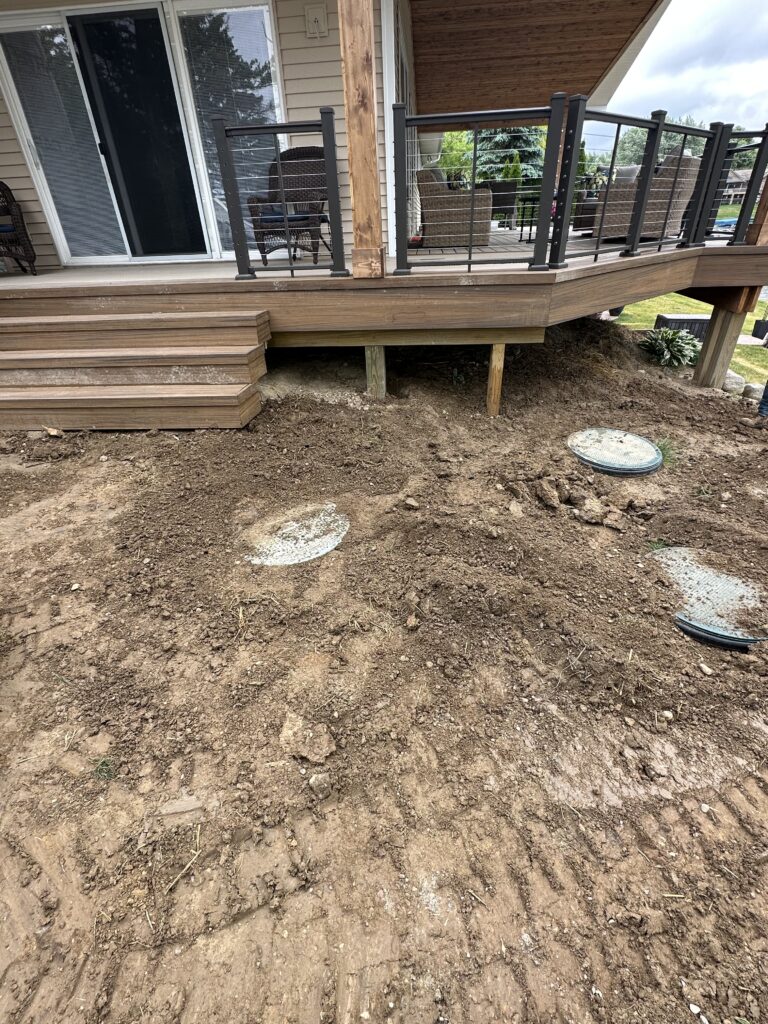
Before anyone designs a septic system, the ground has to answer a basic question: how fast does water move through it? That's what soil and percolation testing is for. It's the step that determines what kind of system your property can support, and skipping it is how people end up with a system that doesn't match the land.
What the Tests Actually Measure
There are two related pieces, and they work together to describe the ground a septic system would drain into.
- A soil evaluation looks at the soil's makeup, structure, and layers, often through a dug pit or borings
- It identifies the seasonal high water table — how close to the surface water sits at the wettest time of year
- It checks for restrictive layers like dense clay or bedrock that water can't pass through
- A percolation (perc) test measures how quickly water actually drains out of test holes
- Together they tell the designer how much soil treatment capacity the property has
The result is essentially a drainage rating for your land. Fast-draining soil with a deep water table can support a smaller, simpler system. Slow clay soil with a high water table needs a larger field, or sometimes an alternative design that compensates for the limitation.
Why It Comes First, Every Time
In our region, this matters more than people expect. The clay-heavy soils common here drain slowly, and a high seasonal water table is a real concern on a lot of properties. A system designed without knowing those numbers might be too small, set too deep, or simply unsuited to the ground — and it'll show up as a failure within a few seasons.
Testing first also protects the permit process. The county health department uses the soil and perc results to evaluate the system design, so the testing isn't optional paperwork — it's the foundation the whole approval is built on. We coordinate that testing and the permitting together so the design that gets submitted is one the ground can actually support.
It's worth understanding that the test isn't a pass-fail grade so much as a description. Two properties can both "have soil" and support completely different systems — one a simple gravity field, the other an engineered design — because the numbers underneath are different. The test turns the invisible part of your land into something a designer and the county can actually plan around. Without it, you're guessing at the most important variable in the whole system, and the field is the part you least want to guess wrong on, because it's the costliest to redo once it's in the ground.
The honest part of this is that testing sometimes delivers news a homeowner doesn't want. A property might need a larger field than expected, or an alternative system, or careful siting to find workable ground. Better to learn that before the dig than after the system's in. John would rather tell you straight up front than build something that won't last.
Frequently asked
Do I really need a perc test if my neighbor has septic?
Yes. Soil conditions can change significantly across short distances, and the water table varies too. Your neighbor's results don't transfer to your lot, and the county requires testing for your specific site.
What if my soil fails the perc test?
A poor result doesn't always mean no system — it often means a different design. Alternative systems exist specifically for difficult soils. The test tells us what the land needs so we can plan accordingly.
When is the best time to test?
Testing is often most telling during the wetter parts of the year when the water table is high, because that's the condition the system has to handle. Local timing and county practice guide when it's done.
Who interprets the results?
The soil and perc data feed into the system design and the county's review. We coordinate the testing and use the results to design a system suited to your ground, with the county health department signing off.