Trench Depth and the Michigan Frost Line
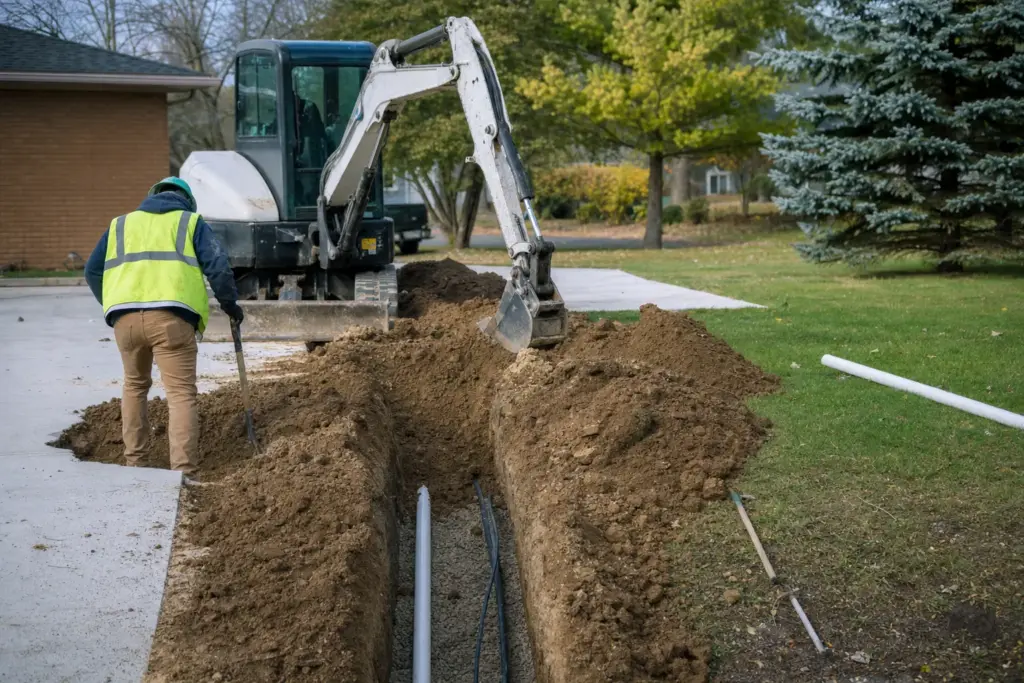
Ask why a water line froze and split, and the answer is almost always the same: it was buried too shallow. In Michigan, depth isn't a detail you can fudge. The ground freezes deep here, and anything that can't tolerate freezing has to sit below where the frost reaches. That's the whole idea behind the frost line, and it drives how deep we dig.
What the Frost Line Is
The frost line is how deep the ground freezes in winter. Above that depth, the soil freezes and thaws through the season. Below it, the ground stays unfrozen. The exact depth depends on the climate and the soil, and Michigan's cold winters push it down well past what people expect. A line set above the frost line is exposed to freezing every winter; a line set below it stays in unfrozen ground year-round.
This matters most for anything that holds water. A frozen water service line can split when the water inside expands. A sewer line that's too shallow can freeze and stop draining. Even lines that don't carry water benefit from being below frost, because the ground above the frost line heaves and shifts as it freezes and thaws, and that movement works on anything buried in it.
Why Depth Varies by Line
Not every buried line goes to the same depth.
- Water service lines need to be well below the frost line, because freezing water is what splits them.
- Sewer lines are set by grade as much as by depth — they have to fall steadily from the house to the main — but they still need to clear frost.
- Gas lines are buried to a depth that protects them and meets the utility's and code's requirements.
- Electric and communication conduit has its own required burial depth, often shallower than water, but still deep enough to protect against frost heave and damage.
Because the right depth depends on the line, the soil, and local code, John sets it for what's actually going in the ground rather than digging everything to one number. And whatever the depth, every dig starts with a MISS DIG request — required in Michigan — so the existing public lines along the route get located before we trench.
Depth Isn't the Whole Story
Getting below frost is necessary, but it's not the only thing. The line still needs proper bedding so it sits on something stable, and the backfill still needs to be compacted in layers so the trench doesn't settle. A line buried deep but on a rock, or backfilled loose, can still fail. Depth, bedding, and compaction work together — that's why we treat the whole trench as one job, not just a hole of a certain depth.
Frequently asked
How deep is the frost line in Michigan?
It varies by location and soil, and Michigan's cold winters push it deeper than people often guess. Rather than rely on a single number, John sets the trench depth to put each line safely below frost for the specific site and the line being run.
What happens if a water line is buried too shallow?
The water inside can freeze and expand, which splits the line. Then you've got a break in the ground that has to be dug up and repaired, often in the worst part of winter. Setting it below frost the first time avoids all of that.
Do electric and gas lines need to go as deep as water?
Not necessarily — different lines have different required burial depths, and electric or communication conduit is often shallower than a water service. But every line needs to clear frost heave and meet the depth its utility and code call for.
Can you always dig to the depth you need?
Most of the time, yes. Where rock, a high water table, or other utilities get in the way, John works out the right approach on the walk-through so the line still ends up properly protected.