How a Machine Gets Secured on a Trailer
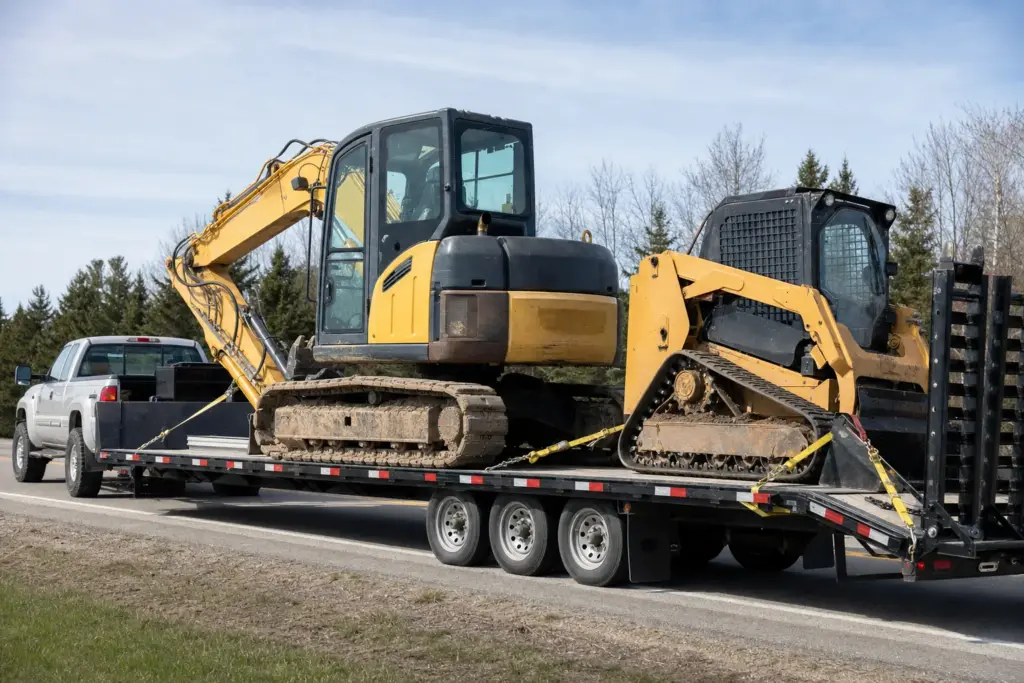
Of everything that goes into hauling a piece of equipment, securing it is the part with no margin for error. A machine that isn't tied down right is a hazard to every car around it and a wreck waiting to happen for your own equipment. When John straps a load to head out across Genesee or Oakland County, this is the step that gets the most attention, because Michigan roads will test it.
Anchor Points and the Right Chains
A machine doesn't get tied wherever a chain happens to reach. It gets secured at the points it was built to be secured at — the tie-down rings and frame anchors the manufacturer put there for exactly this. Those points are rated to take the load; random spots on the body are not.
The chains and binders themselves have to be rated for the weight too. A common rule of thumb is that the combined strength of the tie-downs needs to meet a fraction of the machine's weight, with heavier and taller machines needing more. We work to the federal cargo securement standards, but the practical version is simple: enough properly rated chain, anchored at real points, to hold the machine through anything the road throws at it.
- Tie-downs anchored at the machine's rated points, not improvised spots
- Chains and binders rated for the machine's weight
- Enough independent attachments to hold against forward, back, and side forces
- Attachments and loose parts secured separately
Balance, Slack, and the Walk-Around
Securing starts before the chains go on, with where the machine sits. A load centered and balanced on the trailer holds far better than one shoved to one end. Once it's placed, the machine gets chained front and back so it can't slide either direction, and the binders pull the slack out so nothing shifts.
Loose pieces get their own attention. A bucket, a blade, an attachment riding along — each gets secured on its own. Then comes the walk-around: every binder checked, every chain tight, nothing fouling a tire or the deck. That check happens before pulling out, and the load gets looked at again after the first few miles, because chains can settle once a load takes its first bumps.
What Michigan Roads Do to a Load
Frost heave, potholes, expansion joints, and rough winter surfaces all hammer a load in ways smooth highway never would. A tie-down job that would hold fine on fresh pavement can work loose on a beat-up county road if there's any slack in it. That's why the standard here is no slack and rated chain, full stop.
A load secured to that standard handles the bumps without shifting, which is the whole point. The machine rides like it's part of the trailer, arrives sitting exactly where it started, and comes off ready to work. Cutting a corner on securement to save a few minutes is the most expensive shortcut in hauling, and it's one we don't take.
Frequently asked
How many chains does a machine need?
It depends on the machine's weight and the securement standard, but heavy equipment generally needs at least four independent tie-downs, more for heavier or taller machines. The chains also have to be rated for the load, not just present.
Do attachments like buckets need to be secured separately?
Yes. Anything that can move independently — buckets, blades, augers — gets its own tie-down. A loose attachment is as dangerous as a loose machine.
Can chains really come loose on the road?
They can settle, which is why a load gets re-checked after the first stretch of driving. That recheck catches any slack before it becomes a problem.
Why anchor at specific points instead of wherever a chain reaches?
The manufacturer's tie-down points are engineered to take the load. Chaining to a hydraulic line, a cylinder, or a thin body panel can damage the machine and won't hold reliably.