Salt vs. Sand vs. Brine on Commercial Lots
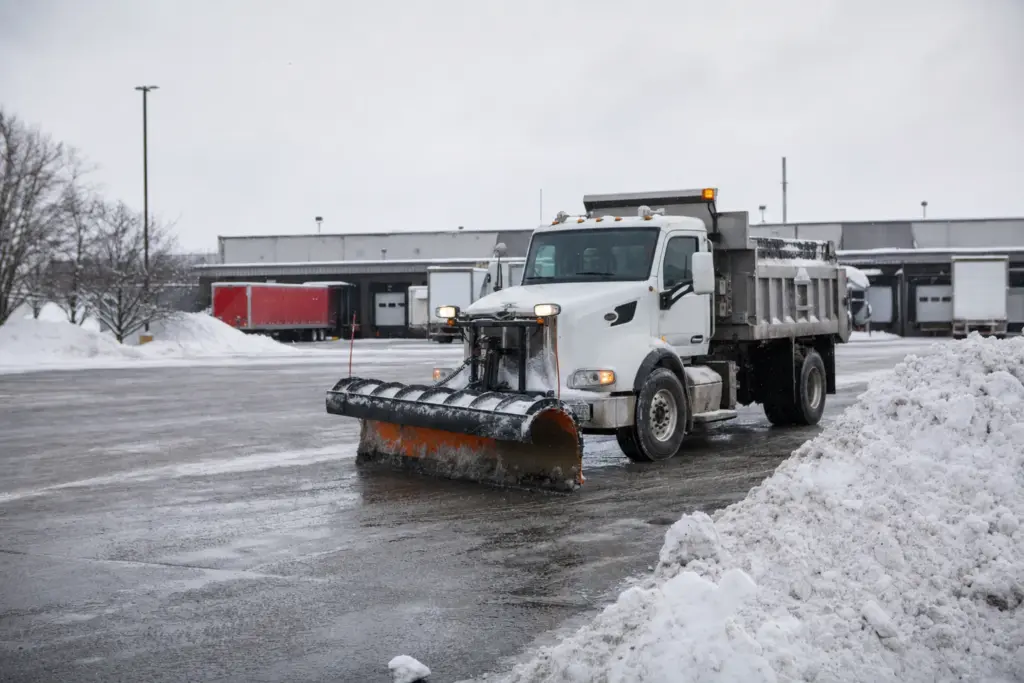
Plowing clears the snow. What you put down afterward decides whether the lot stays safe or glazes back over by morning. Salt, sand, and brine all fight ice, but they work in different ways and fit different conditions. On a commercial site, picking the right one — and timing it right — is the difference between a lot people can walk and drive on and one that turns into a liability. Here's what each does and where it fits.
What each material actually does
These three get lumped together, but only two of them melt ice at all.
- Salt (rock salt): lowers the freezing point so ice and packed snow melt off. It's the workhorse for clearing refreeze on lots and drive lanes. Its effectiveness drops as temperatures fall, so very cold stretches change the calculation.
- Sand: doesn't melt anything. It adds grit for traction on top of ice, which matters when it's too cold for salt to do much. Think of it as immediate footing and tire grip rather than a melting agent.
- Brine: salt already dissolved in water, usually applied before a storm. Laid down ahead of time, it can keep snow from bonding to the pavement, which makes the later plowing and salting more effective.
Choosing for a Michigan site
Most commercial sites end up using more than one. Michigan winters swing from wet 30-degree slush to deep cold where salt slows down, so the right answer changes with conditions, not just the calendar.
Salt is the default for keeping lots and lanes clear of refreeze, and it's where we spend most of our attention because the freeze-thaw cycle here is relentless. When a hard freeze sets in and salt can't keep up, sand earns its place by giving people and trucks traction until temperatures come back up. Pre-treating with brine before a storm can cut down how hard the snow bonds to the surface, making the whole job cleaner.
The real skill is timing and placement — putting material where the traffic is, on the schedule that fights the refreeze, rather than dumping it everywhere and hoping. During the pre-season walk, John notes the high-traffic zones, the low spots that refreeze first, and the foot-traffic paths, so the treatment goes where it actually matters.
More material isn't better
There's a temptation to think that piling on de-icer is the safe choice — if some salt helps, more must help more. It doesn't work that way. Over-applying wastes material, drives up cost, and does no extra good once the surface is treated. Heavy, indiscriminate application also concentrates the downsides: more residue tracked into buildings, more runoff toward landscaping, and more wear on surfaces over time. The skill is matching the amount and the material to the conditions, not blanketing the lot to feel covered.
That's why we treat the high-traffic and refreeze-prone areas as priorities and don't waste effort on a back corner that no one's walking. It's also why reading the forecast matters — knowing whether a cold snap is coming, whether the storm will be wet or dry, and whether pre-treating is worthwhile lets us choose the right approach instead of defaulting to one habit all winter. A thoughtful treatment plan keeps your lot safe while using material where it earns its keep, which is better for your budget, your pavement, and the property around it.
Frequently asked
Is salt always the best choice?
Usually for melting refreeze, but not always. In a hard freeze, salt loses effectiveness and sand's traction becomes more useful. We read the conditions rather than defaulting to one material every time.
Will salt damage my pavement or landscaping?
Any de-icer used heavily has tradeoffs over time. Applying the right amount in the right places — rather than over-applying everywhere — is part of how we limit that. We can talk through your site's sensitivities during the walk-through.
Do you pre-treat before storms?
Where it makes sense, yes. Pre-treating can keep snow from bonding to the pavement, which makes the later plowing and salting more effective. It's most useful when we have good warning ahead of a storm.
Who decides what gets used and where?
We do, based on conditions and your site's priorities. The high-traffic and refreeze-prone areas get the most attention, which we map out before the season.