Drainage Behind a Retaining Wall — Weep Holes, Gravel, Drain Tile
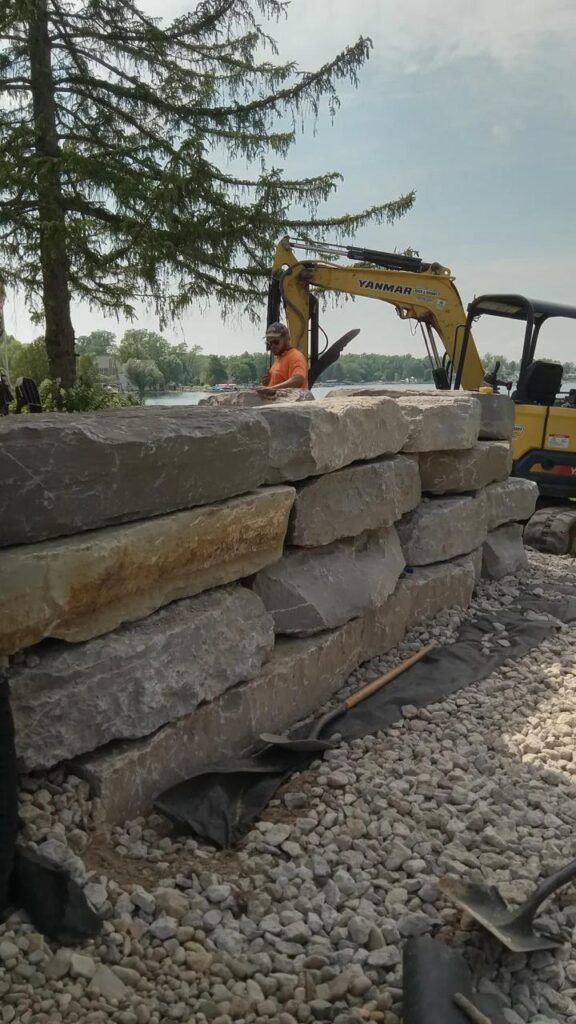
If you only get one thing right on a retaining wall, make it the drainage. Walls don't fail from the soil they hold back — they fail from the water in that soil with nowhere to go. The whole drainage system behind a wall exists to give water a fast, easy exit before it can build pressure or freeze. Here's how the pieces work together.
The Three Parts That Move Water Out
Good wall drainage isn't one feature, it's a system. Each part hands water off to the next so it never sits against the back of the wall.
- Gravel backfill — a column of clean, free-draining stone directly behind the wall face. Water hits it and falls straight down instead of soaking the soil and pressing on the wall.
- Drain tile (perforated pipe) — laid at the base behind the wall, it catches the water coming down through the gravel and carries it sideways to a safe outlet, away from the wall and footing.
- Weep holes — gaps or openings through the wall face that let any water that does collect escape to the front instead of pooling behind.
Together they relieve the hydrostatic pressure that bows and cracks walls, and they keep the backfill from staying saturated through a freeze.
Where Drainage Goes Wrong
The most common mistake we see on failed walls is backfilling with the native clay that came out of the hole. Clay holds water and drains slowly, so it traps everything against the wall — the opposite of what you want. Another is a drain pipe with no real outlet, so water collects and has nowhere to actually go. And weep holes that get blocked or were never built stop relieving pressure entirely.
We separate the gravel from surrounding soil so it doesn't clog with fines over time, pitch the drain tile to a daylight or drainage outlet, and keep the system continuous along the wall. It's not glamorous work and you'll never see most of it once the wall is finished — but it's the part that decides whether the wall is still standing straight in twenty years.
Frequently asked
Are weep holes enough on their own?
No. Weep holes are the last line of escape, but they work best with gravel backfill and drain tile moving the bulk of the water out at the base. Relying on weep holes alone leaves too much water sitting behind the wall.
Why can't I just backfill with the dirt that came out?
Because that dirt is usually clay around here, and clay holds water against the wall instead of letting it drain. We backfill with clean, free-draining stone behind the face so water moves down and out.
Where does the water from the drain tile go?
To a safe outlet away from the wall — daylighting down a slope or tying into a drainage system. A drain with no outlet just relocates the problem, so we always plan where the water ends up.
Can you add drainage to an existing wall?
Sometimes, depending on the wall and access. It often means excavating behind the wall to install proper backfill and tile. John will look at what's there and tell you whether it's worth retrofitting or rebuilding.