The Base Prep That Lets a Patio Survive Michigan Freeze-Thaw
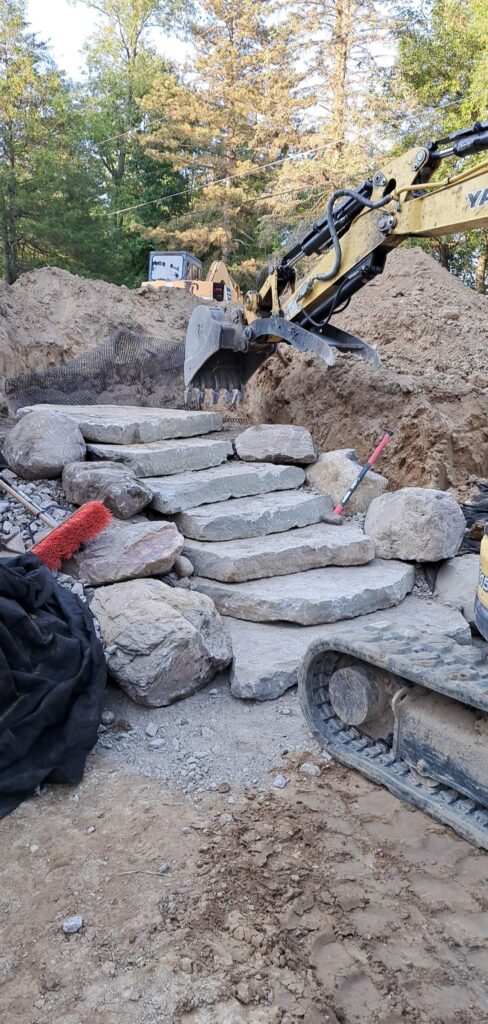
Almost every shifted, heaved, or sunken patio we get called out to look at has the same root cause, and it isn't the pavers or the stone on top. It's what's underneath. The base is the part nobody sees and the part that decides whether your patio is still flat in five winters.
Why the Base Is Everything Here
Michigan ground moves. Water in the soil freezes, expands, and pushes up — that's frost heave — then the thaw lets everything settle back, rarely to exactly where it started. Repeat that cycle a few dozen times a winter and anything set on a weak or water-logged base gets shoved around.
Our soils make it worse. A lot of yards around Genesee and Oakland County sit on clay, which holds water like a sponge and gives that water plenty of chances to freeze right under your patio. So the whole game is building a base that drains fast, compacts tight, and doesn't trap water where it can freeze and lift.
How We Build It
There's no shortcut here, and the steps matter in order:
- Excavate to depth. We dig out the topsoil and soft material well past the patio footprint, going deep enough for a full base — not just enough to bury a thin layer of stone.
- Lay aggregate in lifts. We bring in crushed stone and compact it in layers (lifts) rather than dumping it all at once. Compacting in lifts is what gets density all the way through instead of just on top.
- Compact each lift. A plate compactor passes over every layer until it's locked. Loose stone settles; compacted stone doesn't.
- Build in pitch. The base is graded with a slight slope so water sheds off the finished surface and away from the house, never pools.
- Set the bedding layer. A thin, screeded layer of the right material gives the pavers or stone a true, level seat.
Get those steps right and the surface on top has a stable, draining foundation that moves as little as possible through a winter. Skip or rush them and no amount of nice pavers will save it.
What Goes Wrong When It's Skipped
The shortcuts are predictable. Too little excavation, so the base is too thin to matter. No compaction, so the stone settles unevenly the first wet season. No pitch, so water pools and freezes right where it does the most damage. Setting pavers on sand alone, or worse, straight on clay. We've re-done patios that were only a couple of years old because the original install skipped the base — and re-doing it always costs more than doing it right once.
Frequently asked
How deep does a patio base need to be in Michigan?
Deeper than most people expect, because of frost. The exact depth depends on the soil, the use, and the drainage, which is why John takes a look in person rather than quoting a one-size number. The point is a base thick enough and well-drained enough that frost can't lift it.
Can't I just lay pavers on sand?
Sand alone isn't a base — it's a bedding layer that sits on top of compacted stone. Pavers set on sand or bare soil will rut, settle, and heave. The compacted aggregate underneath is what carries the load and resists frost.
Why does compaction matter so much?
Loose stone has air gaps and will settle under weight and weather. Compacting in lifts squeezes those gaps out so the base behaves like a solid, stable layer. It's the single step that gets skipped most often on cheap installs.
Will a good base stop all movement?
It dramatically reduces it. No outdoor surface in Michigan is perfectly frozen in place, but a proper base, good drainage, and built-in pitch keep movement small enough that you'll never notice it.