French Drains for a Wet Yard — Do They Actually Work in Michigan?
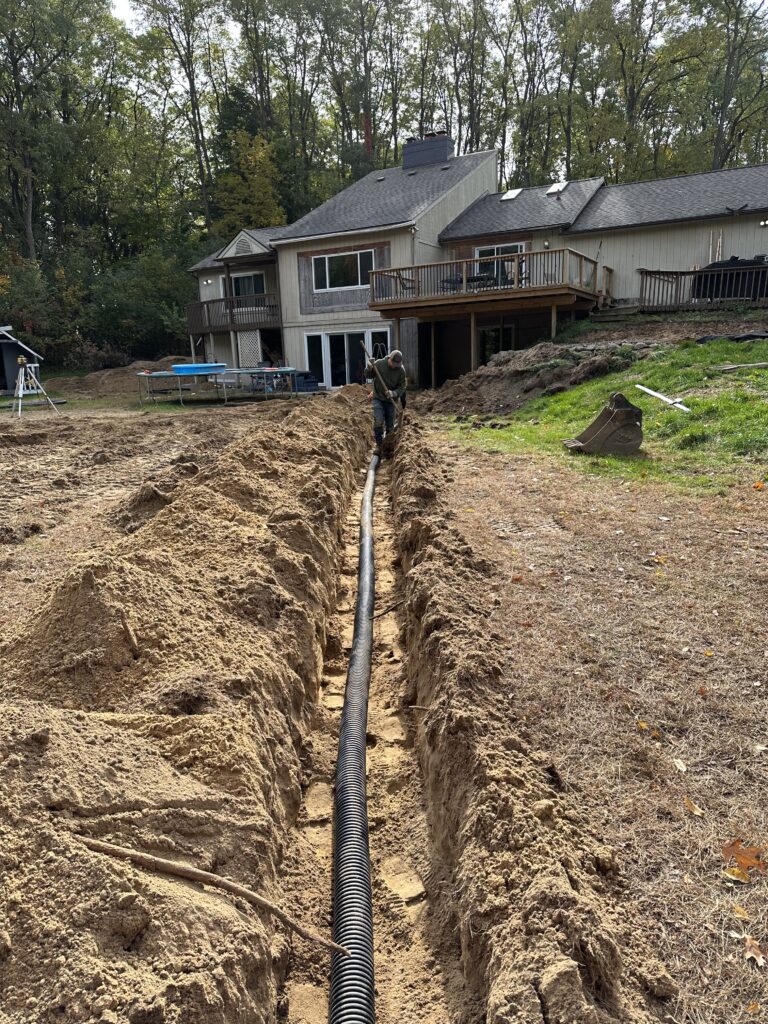
A French drain is one of the most common fixes for a wet yard, and one of the most commonly botched. Done right, it quietly carries water away for years. Done wrong, it clogs, freezes, and becomes a buried gravel trench that does nothing. The difference comes down to how it's built — which matters even more on Michigan's clay soil. Here's the honest version.
What a French Drain Actually Is
Strip away the name and a French drain is simple: a perforated pipe sitting in a gravel-filled trench, wrapped to keep dirt out, sloped so water flows downhill to somewhere you want it. Water in the soil seeps into the gravel, drops into the pipe, and gets carried off instead of sitting in your yard.
The parts that make or break it:
- Slope — the pipe has to fall consistently toward the outlet, or water just sits in it
- Gravel and fabric — clean stone around the pipe, filter fabric keeping clay and fines from clogging it
- A real outlet — the water has to go somewhere lower; a drain to nowhere is just a trench
- Depth — deep enough to catch the water table and to sit below the worst of the frost
Miss any one of those and you've buried a problem instead of solving it.
Why Michigan Clay Changes the Game
Here's the catch most homeowners don't hear: clay soil barely lets water through. A French drain works by collecting water that moves through the surrounding soil — and clay moves water slowly. So a French drain dropped into pure clay can underperform because the water can't reach it fast enough.
That doesn't mean they don't work here. It means they have to be built for our ground. That can mean a wider gravel zone to give surface water a path in, pairing the drain with regrading so water is directed toward it, and setting the right depth so the freeze-thaw cycle doesn't heave it. We also make sure the outlet stays clear, because a frozen or buried outlet in March turns the whole system into a dam. Built with the clay in mind, a French drain absolutely earns its keep.
When It's the Right Tool — and When It Isn't
A French drain shines when you've got water seeping up in a yard, a chronically soggy low area, or water wicking toward a foundation. It's less the answer when the real problem is surface grade — water running across the top of the lawn from a bad slope. In that case, regrading or a swale moves more water for less digging. Often the right fix is a combination, and that's the call we make on-site after seeing where your water actually comes from and where it's going.
Frequently asked
Will a French drain dry out my whole yard?
It depends on why the yard is wet. A French drain handles subsurface water and chronic soggy spots well. If the problem is surface runoff or bad grade, it works best paired with regrading. We figure out the source first.
Do French drains freeze in winter?
They can if they're too shallow or the outlet ices over. We set depth and the outlet so the system keeps working through freeze-thaw rather than turning into a frozen plug come spring melt.
How long does a French drain last?
A properly built one with filter fabric and a clear outlet lasts many years. The ones that fail early are almost always missing the fabric, the slope, or a real place for the water to go.
Can you install one in an existing landscaped yard?
Yes, though it means opening a trench through the lawn. We plan the route to minimize disruption and restore the surface after. John will map it during the walk-through.