Grading a Lake Shoreline for Easy, Safe Swimming
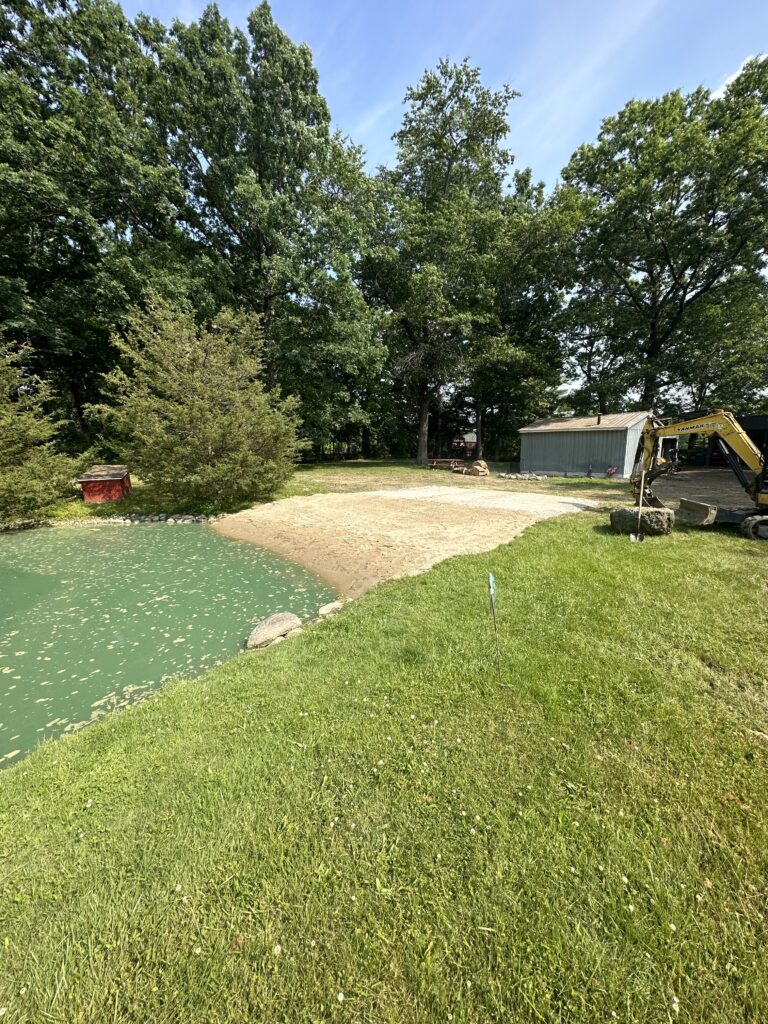
The difference between a beach you wade into and one you stumble off is all in the grade. A shoreline graded for swimming gives you a gentle, predictable walk from dry sand into the water, no sudden drop-off, no soft muck, no surprise step into deep water.
The Slope Is What Makes It Swimmable
A good swimming entry is not flat and it is not steep. It is a steady, gentle slope that carries you gradually from the sand into water deep enough to swim, with no abrupt change underfoot. Getting that right is the heart of grading for swimmers.
- A gradual slope down to the water so wading in feels natural for kids and adults
- A firm bottom underfoot rather than soft muck that swallows your feet
- A consistent grade with no hidden drop-offs or steps
- Enough depth a comfortable distance out for actual swimming
- A shape that still sheds runoff so the beach itself stays put
Too steep and the entry is unsafe and uncomfortable, especially for kids. Too flat and you walk forever before the water is deep enough to swim. The right slope sits between those, tuned to how the lot drops off into the lake.
Building the Grade to Last
Shaping a swimmable slope is one thing. Keeping it that way through Michigan seasons is another. Wave action and runoff constantly try to flatten the upper beach and pile sand at the toe, and winter ice can shove the whole waterline edge around. Freeze, thaw, repeat. We grade the beach so it sheds runoff cleanly instead of letting water channel through and reshape it, and we set a firm base under the swimming entry so it does not turn soft over a season. Where the natural lake bottom is muck, that often has to come out first so the new grade sits on something stable.
John walks the shoreline and reads how the lot already drops into the water, then plans the slope to match how you and your family actually use the beach. A spot for little kids to wade gets a gentler entry than a shoreline meant for diving off a dock farther out. It is built around your use, not a one-size grade.
The lake's water level is part of the read, too. Inland lake levels move with the season and the year, so a slope that looks right in a low-water spell can leave the swimming area too shallow when the level comes up, or vice versa. We grade with that movement in mind, aiming for an entry that works across the normal range rather than only at today's level. Getting that right is the difference between a beach that swims well all season and one that only feels right for a few weeks. It is the kind of detail that is easy to miss until you are standing in it, which is why reading the shoreline in person matters.
Frequently asked
What slope is best for a swimming beach?
A gentle, gradual one with no sudden drop-off. The exact grade depends on how the lot falls into the lake and how you use the beach, which is why John reads it on site before planning the entry.
Can you fix a beach that drops off too sharply?
Often, yes. We can reshape the entry to a safer, more gradual slope, though on some lots it means moving material and addressing what is below the sand. We will tell you what your shoreline allows.
Why is the bottom of my swimming area so soft?
That is usually muck or silt under the sand. A swimmable entry needs a firm base, so soft material often has to be removed and replaced before the grade will hold and feel solid underfoot.
Is grading for swimming different from just adding sand?
Yes. Adding sand without shaping the slope leaves the same awkward or unsafe entry. Grading deliberately builds the gradual, firm slope that makes wading and swimming comfortable and keeps the beach from washing.