How We Build Flagstone Steps That Stay Put Through Michigan Winters
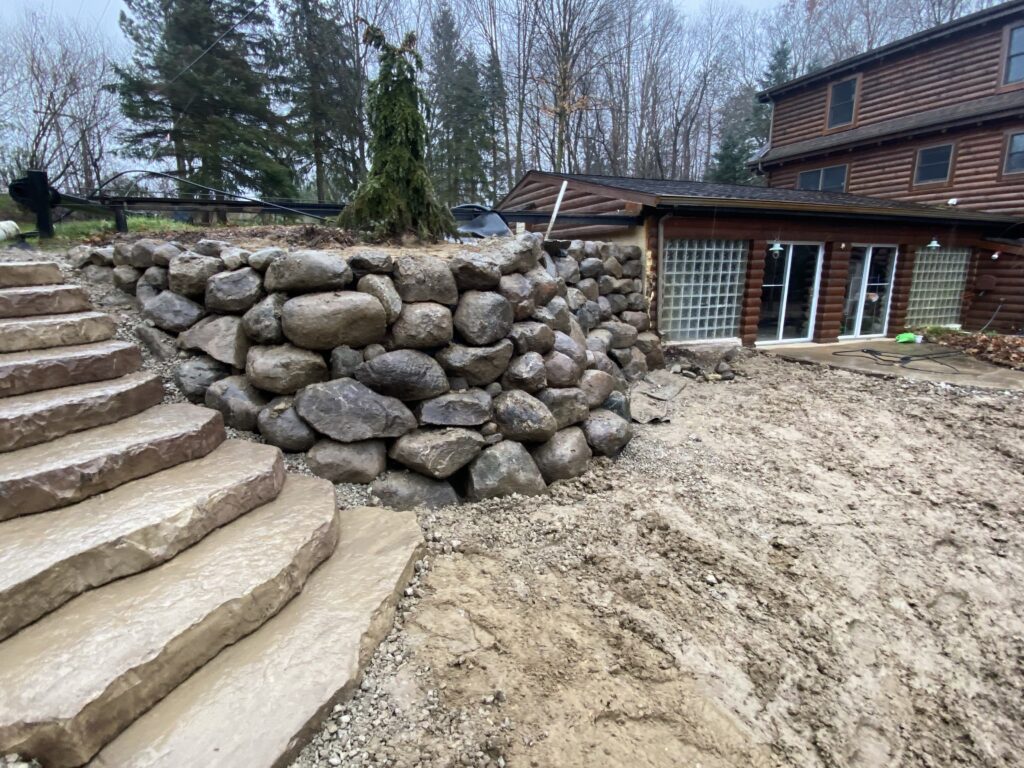
Few things dress up a sloped yard like natural flagstone steps. They look like they've always belonged there — but only if they're built to handle our climate. A flagstone step that rocks underfoot or tips after one winter is a trip hazard, not a feature. Here's how we set them so they stay solid.
What Makes a Stone Step Last
A flagstone step lives or dies by three things: the base under it, the bed it sits on, and how level and seated each stone is. Get those right and a slab of natural stone will sit dead-still for decades. Get them wrong and frost will rock it loose the first winter.
Because each flagstone is a heavy, irregular natural piece, every step is its own little engineering problem. The goal on each one is full contact with the bed — no hollow spots underneath where water can collect, freeze, and lever the stone up. A stone that only touches at two corners is a stone that's going to wobble.
- Solid base — excavated and compacted aggregate, the same principle as a patio
- Proper bedding — each stone seated fully so there are no voids beneath it
- Drainage — built so water sheds off and away, not into the joints
- Selection — thick, sound stones chosen and oriented so the step is level and safe
Building Them Step by Step
We start at the bottom and work up the slope. Each tread gets a compacted base, then a leveling bed, then the stone itself — set, checked for level front-to-back and side-to-side, and tested for any rock before we move on. A flagstone step should sit flat with a hair of pitch so water runs off the front edge instead of sitting on the tread.
The riser height matters for safety and comfort. Steps that are too tall or uneven in height are where people stumble, so we keep the rise consistent from one tread to the next as we climb the grade. On longer runs we may pair steps with a landing or tie them into a paver walkway top and bottom so the whole path flows.
Natural stone also expands and contracts, and it shrugs off salt and weather better than a lot of manufactured products — which is part of why flagstone holds up so well in Michigan when it's set on a real base. The stone isn't the weak link. The install is.
Frequently asked
Why does my existing flagstone step rock or wobble?
Almost always a void underneath. If the stone was set on loose soil or only touches the bed in a couple of spots, water collects in the hollow, freezes, and works the stone loose over a winter or two. Re-setting it on a proper bed fixes it.
Are natural flagstone steps good for Michigan weather?
Yes — natural stone handles freeze-thaw and salt well, and it doesn't fade or spall the way some manufactured surfaces can. The key is the base and bedding beneath each stone, not the stone itself.
Can flagstone steps tie into a paver patio or walkway?
Absolutely. We regularly connect stone steps to paver walkways and patios so a sloped yard flows from one level to the next. John can lay out how the steps and the rest of the hardscape work together.
How steep a slope can flagstone steps handle?
Quite a range, because we build the run to fit the grade — more treads on a steeper slope, sometimes with a landing in between. The walk-through is where we figure out the right layout for your hill.