What Kinds of Equipment We Can Haul
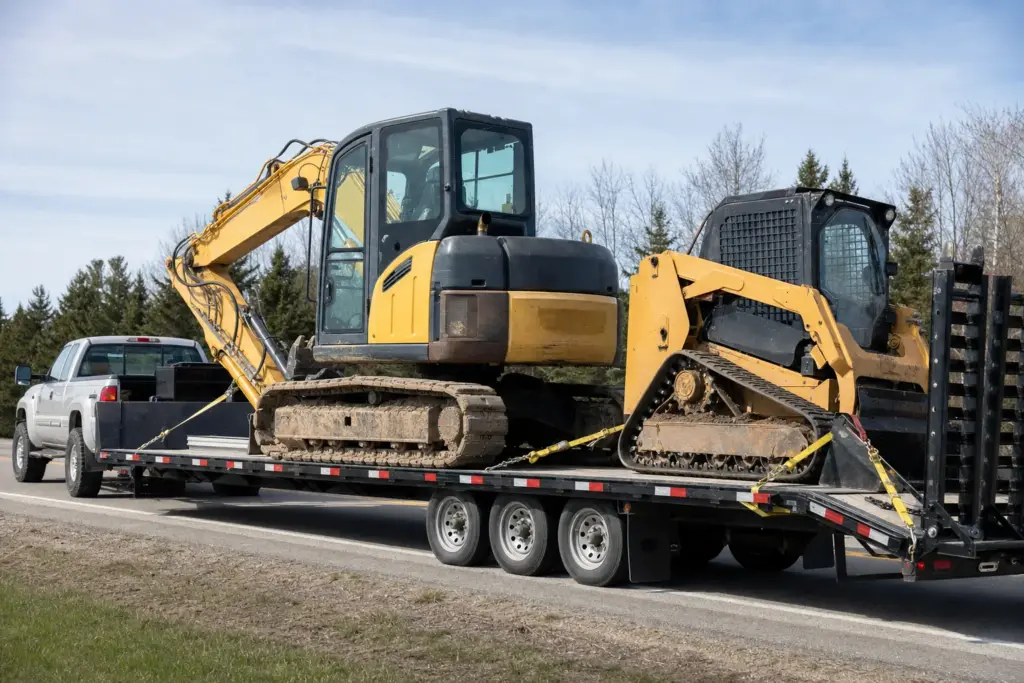
People often ask whether their particular machine is something we can move. The honest short answer is: if it needs a trailer and someone who knows how to load it, we can usually haul it. The longer answer is that what matters isn't the brand or the type so much as the weight, the dimensions, and whether it can be loaded safely. Here's how John thinks about it when a contractor or farmer around Fenton calls about a move.
The Common Machines
Most of what we move is the everyday workhorse equipment that crews and property owners actually run. None of it is exotic, and all of it has a trailer and a loading method that fits.
- Skid steers and track loaders — light, compact, and quick to load, usually on a tilt or equipment trailer.
- Mini and compact excavators — loaded carefully so the boom and tracks sit right and the weight balances.
- Dozers — heavier and often needing a lowboy or deckover depending on size.
- Compact track loaders, backhoes, and tractors — common on farms and small sites, straightforward to haul with the right deck.
- Attachments — buckets, blades, augers, forks, and the like, secured separately whether they ride with a machine or on their own.
If your machine is on that list or close to it, it's routine work. The size of the machine sets the trailer, not the other way around.
What Decides Whether It's a Simple Haul
The line between a simple haul and one that needs extra planning comes down to a few numbers. Weight is the big one — it sets the trailer and decides whether the load runs into overweight territory. Width and height matter next, because an extra-wide or tall machine can push past the limits where a permit comes into play.
- Weight — fits the trailer's rated capacity and stays within legal axle limits, or needs special handling.
- Width — narrow loads travel freely; wide ones may need an oversize permit.
- Height — tall machines have to clear every bridge and line on the route.
- Mobility — a machine that drives on under its own power loads differently than one that's down and needs winching.
None of these are dealbreakers on their own. They just change the plan. A wide load gets a permit and a route; a non-running machine gets a winch and extra time. Knowing the numbers up front is what keeps the move smooth.
When to Just Ask
If you're not sure whether your equipment is something we can move, the simplest path is to tell John what it is and roughly what it weighs. Between the trailers we run and the planning we do, the range of what's haulable is wide. The cases that need a real conversation are the very heavy, very wide, or very tall loads where permits and routing drive the job — and even those are usually doable with the right setup.
What we won't do is wing it. Every machine gets matched to a trailer that fits it and a route it can travel. That's the difference between a haul that arrives ready to work and one that becomes a problem on the road.
Frequently asked
Is there a weight limit on what you can haul?
Every trailer has a rated capacity, and the law sets axle and gross weight limits. Within those, we match the trailer to the machine. Very heavy loads can still move with the right equipment and permits — it just takes more planning.
Can you haul a machine that doesn't run?
Yes, but tell us in advance. A non-running machine usually needs to be winched onto the trailer, which changes the loading plan and the time it takes.
Do you move attachments and implements on their own?
We do. Buckets, blades, augers, and similar attachments can ride with a machine or travel separately, and each gets secured properly either way.
What if I'm not sure my equipment fits your trailers?
Just ask. Tell John the machine and a rough weight, and he'll tell you straight whether it's a routine haul or one that needs special handling.