How a Septic Drain Field Actually Works
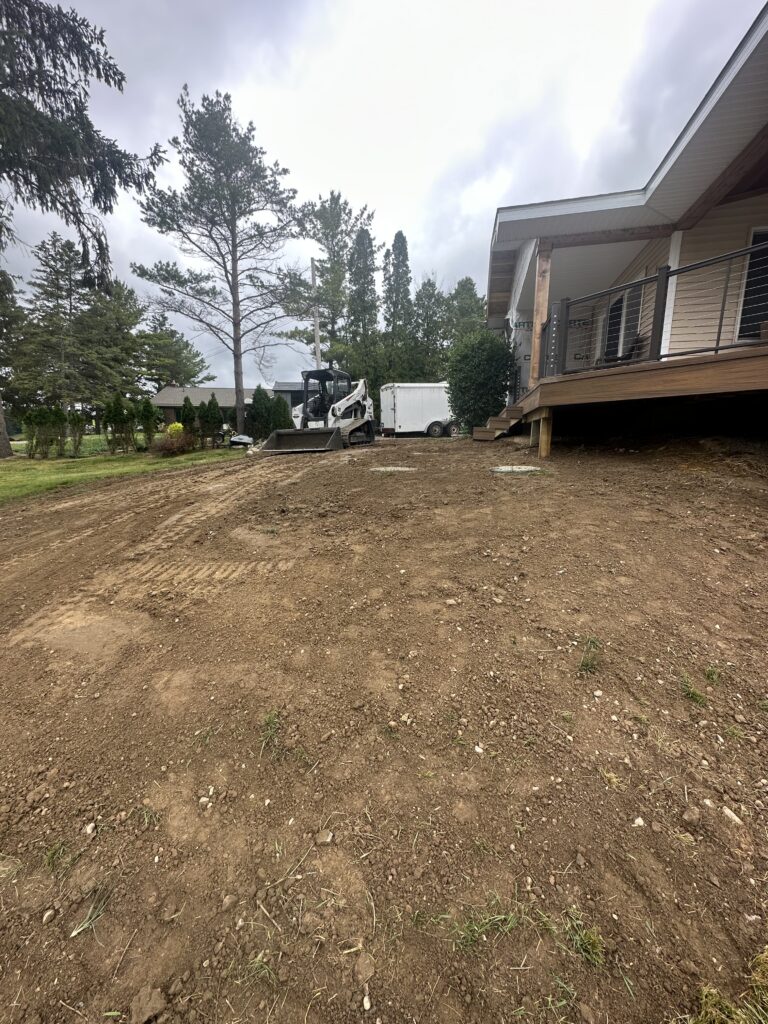
People tend to think of the tank as the heart of a septic system, but the drain field is where the real work happens. The tank just separates and holds; the field is what treats and returns water to the ground. Understanding how it works makes it a lot easier to keep it working.
From Tank to Field
A septic system has two main parts working together. Knowing what each one does explains why the field is the piece you have to protect.
- The house line carries wastewater to the tank
- In the tank, solids settle to the bottom and grease floats to the top
- The relatively clear liquid in the middle, called effluent, flows out to the field
- The field distributes that effluent through a network of perforated pipes in gravel-filled trenches
- The effluent seeps down through the soil, which filters and treats it naturally
- Treated water rejoins the groundwater
The key point is that the field relies on the soil doing the final treatment. As long as solids stay in the tank and the soil can keep accepting water, the system runs quietly for decades.
Why Fields Fail — And How Soil Decides Everything
A drain field fails when the soil can no longer absorb the effluent. That happens a few ways. If a tank isn't pumped on schedule, solids carry out into the field and clog the trenches and the soil around them — a clogged field is the single most common cause of failure we see. Driving over the field compacts the soil and crushes lines. Roots invade the pipes. And too much water, all at once and all the time, simply overwhelms the field's capacity.
Soil type matters enormously here. In our clay-heavy ground, water moves through slowly, so fields have to be sized larger than they would on sandy soil to keep up. That's exactly why the soil and percolation tests come first on any install — the field has to be designed for the ground it's draining into. A field that's perfect for sandy soil would back up in clay.
When we lay out a field, we size it for the home's load and the actual soil, set it where vehicles won't compact it, and grade the surface to shed surface water away. Built to code and built to last means the field is matched to the ground, not just dropped in.
It helps to picture the field as a living system rather than a piece of plumbing. The soil isn't just a filter; it's full of microorganisms that do much of the final treatment, and they need oxygen to work. That's part of why a field can't be sealed under pavement or a structure, and why a saturated, waterlogged field stops treating properly — the water drives out the air the soil needs. It's also why overloading a field with too much water all at once is so hard on it: the soil can only process so much before it's swamped. A healthy field is one that gets a steady, manageable amount of effluent and has the air, the soil, and the room to do its work. Treat it that way and it keeps treating your wastewater quietly for years.
Frequently asked
How long does a drain field last?
A well-designed, well-maintained field can last decades, but there's no fixed number. Pumping the tank on schedule, keeping vehicles off the field, and not overloading it with water all extend its life. Neglect any of those and it can fail much sooner.
Can I plant a garden or build over my drain field?
Keep structures, driveways, and deep-rooted plants off the field. Grass is ideal — it helps with absorption and erosion without sending roots into the lines. Building or paving over a field is one of the surest ways to ruin it.
Why does my field need to be so big?
Field size is set by the home's wastewater load and how fast your soil absorbs water. Slow-draining clay soils need larger fields to handle the same load that sandy soil could manage in a smaller area.
Can a failed drain field be revived?
Sometimes a struggling field improves once whatever's overloading it is corrected. A field that's fully clogged or saturated usually has to be replaced. A real diagnosis tells you which situation you're in.