Choosing the Right Sand for a Lake Beach
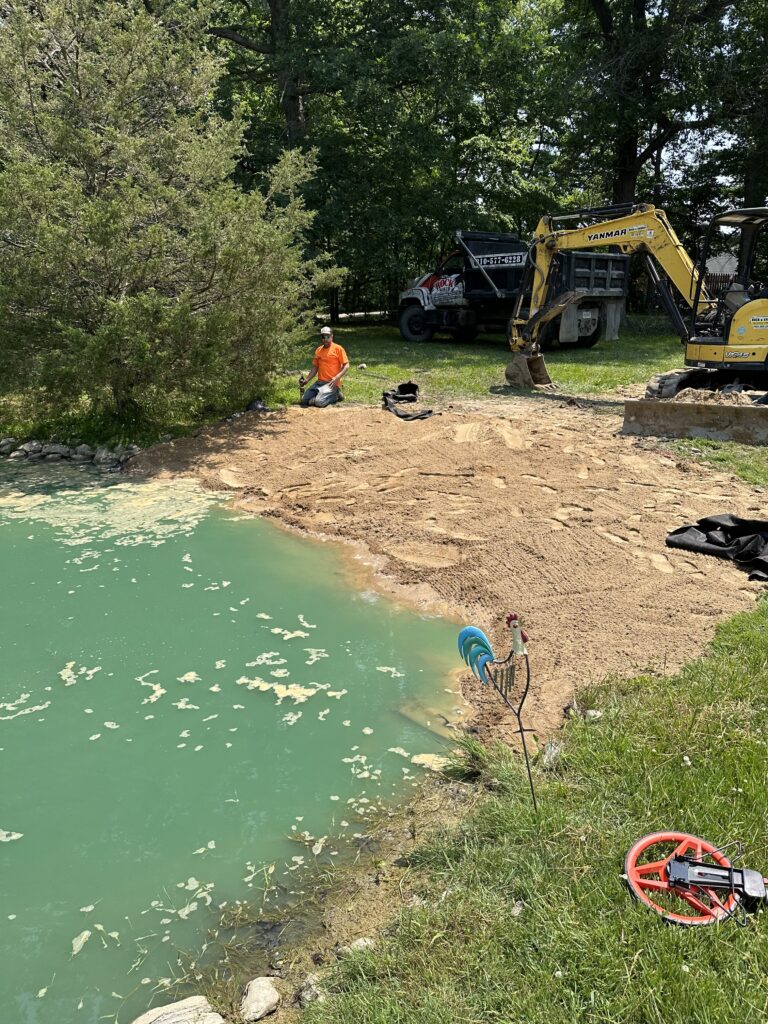
The sand you walk on at a good lake beach is not the same sand a builder pours into a foundation. Pick the wrong material and the beach feels harsh underfoot, clouds the water, or washes off fast. Getting the right sand is one of the quietest decisions in a beach build, and one of the most important.
What Makes Good Beach Sand
A beach has a few jobs at once. It has to feel good on bare feet, drain so it is not a muddy mess after rain, and hold its shape against wave and wake. The material that does all three has a few traits in common.
- Clean, meaning washed and free of clay, silt, and organic muck that clouds the water and turns soft
- A comfortable grain, not so fine it packs hard and tracks everywhere, not so coarse it is rough to walk on
- Good drainage so water sheets through and off instead of pooling on top
- Light, natural color that reads like a real beach rather than fill dirt
Sand that is heavy with silt or clay might look fine in the truck, but on a shoreline it muddies the swimming area and breaks down into something that does not feel like a beach at all.
Matching the Sand to the Shoreline
There is no single right sand for every lot. A protected cove that takes little wave action can hold a finer, softer sand because there is less force pulling at it. An exposed shoreline that catches wind and wake often does better with a slightly coarser material at the waterline that resists being dragged off, with finer sand kept higher up where feet actually land. Some builds layer the material, with a stable base below and the nicer walking sand on top.
What we will not do is haul in cheap fill and call it a beach. Clean material costs more, but it is the difference between a beach you enjoy and a muddy strip you fight with every year. John talks through the options during the walk-through, factoring in your exposure, how you use the beach, and what holds up to Michigan wave and ice. Freeze, thaw, repeat. We build it to take it.
The sand also has to be matched to what sits below it. On a lot where soft muck has to be removed first, the new base and the beach sand work as a system, with the base giving the sand something firm to hold against. On firmer ground the choice is simpler. Either way, the color and feel you want on top has to be balanced against what will actually stay put on your shoreline, and that balance is easier to get right when someone has read the lot in person. A bag-store guess about sand cannot account for how exposed your waterline is or what the lake does to it.
Frequently asked
What kind of sand do you use for a beach?
Clean, washed beach sand chosen for the lot. We avoid silty or clay-heavy material because it clouds the water and turns soft. The exact grain depends on your exposure and how you use the beach.
Why not just use cheaper fill sand?
Fill sand usually carries clay, silt, or organics that muddy the swimming area and break down underfoot. It washes and packs poorly. Clean beach sand costs more up front but actually performs and lasts.
Will the right sand keep the water clearer?
Cleaner sand means less silt washing into the swimming area, so yes, it helps keep the water around your beach clearer than muddy fill would. Grade and the lake bottom matter too.
Can you match the sand my neighbors used?
Often, yes. If there is a look or feel you want, tell John during the walk-through and we will source a clean material that fits while still standing up to your shoreline's exposure.