Tying Into the Municipal Sewer: How the Connection Works
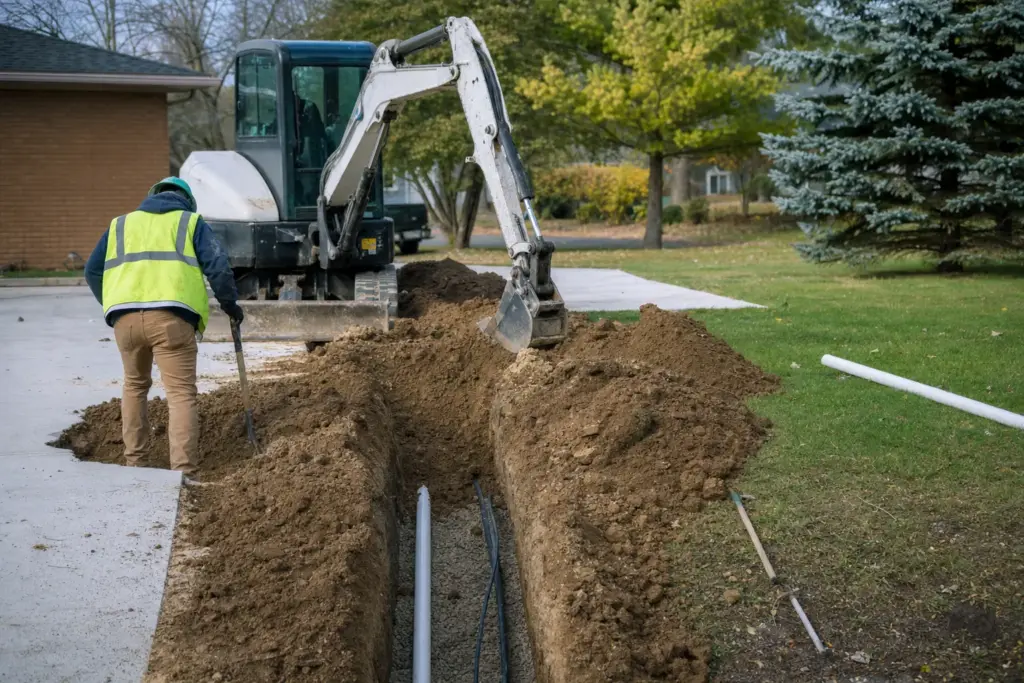
When a property goes from a septic system to a public sewer, or when a new build connects for the first time, the job is a sewer tie-in. It runs a line from the house out to the municipal main and makes the connection. It's straightforward work when it's done right, but there are a few things that have to line up — grade, permits, and the route around everything else in the ground.
What a Sewer Tie-In Involves
The goal is a connection that drains by gravity, stays sealed, and doesn't settle. Here's the shape of the work.
- Locate the main and the connection point. The municipality usually has a record of where the sewer main runs and where a property is meant to tap in. We confirm that before digging.
- Call MISS DIG. Before any excavation, we submit a MISS DIG request so the existing public utilities along the route get located and marked. This is required in Michigan and we never skip it.
- Pull the permits. Tie-ins to a public system are permitted and inspected. The municipality has its own requirements, and the work gets inspected before the trench is closed.
- Trench to grade. A sewer line drains by gravity, so it has to fall at a steady slope from the house to the main. Too little fall and it drains slow; too much and solids can outrun the liquid. The grade is the part that takes care.
- Make the connection. The line ties into the main properly so the joint stays sealed.
- Backfill, compact, restore. The trench gets filled in layers and compacted so it doesn't sink, then the surface gets put back.
Why Grade and Inspection Matter
A sewer line is one of the few utilities that runs entirely on gravity, so the slope across the whole run has to be consistent. A dip or a flat spot is where problems start. That's why the trench bottom gets prepared carefully and the pipe gets bedded to hold its grade, not just dropped in.
The inspection step protects you. The municipality wants eyes on the connection and the bedding before the trench is closed, because once it's buried, fixing a bad joint means digging it all back up. We work to their schedule and leave the trench open until the inspection clears.
Working Around What's Already There
On an existing property the line often has to cross a finished yard, a drive, or other buried utilities — water, gas, electric. That's why the MISS DIG locate and our own route planning matter. We lay the run out to clear what's already in the ground and to keep the surface disruption down, then restore what we cross.
Frequently asked
Do I need a permit to tie into the sewer?
Yes. Connecting to a municipal sewer is permitted and inspected by the local authority, and the requirements vary by municipality. John handles coordinating the work with the inspection so the trench isn't closed before it's signed off.
Can you connect a house that's currently on septic?
Yes. Moving a property from septic to a public sewer is common when service becomes available, and it's part of what we do — running the new line and tying it into the main.
Why does the slope of the line matter so much?
A sewer line drains by gravity, so it needs a steady, consistent fall the whole way. Too flat and it drains slowly or clogs; too steep and solids can separate from the flow. Getting the grade right is the heart of the job.
Will my yard be torn up?
There's a trench across whatever the line crosses, but we plan a tight route, dig efficiently, then backfill, compact, and restore the surface so it recovers instead of settling into a sunken strip.