Why Lake Beaches Wash Out and How to Prevent It
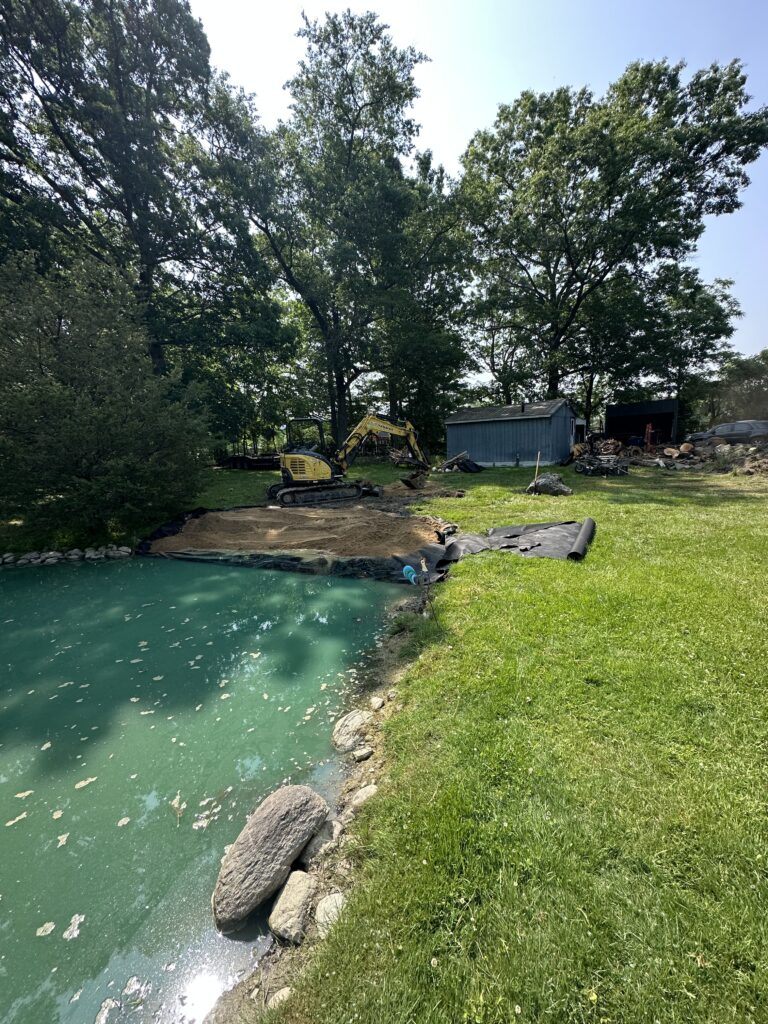
If you rebuild your beach every spring only to watch it thin out by August, the sand is not the problem. Beaches wash out for reasons you can usually see once you know what to look for, and most of them come down to grade and exposure.
The Three Things Pulling Your Sand Away
Sand does not just vanish. Something is moving it, and on a Michigan inland lake it is almost always one of these three forces working together.
- Wave action drags sand off the toe of the beach and carries it into deeper water, worst on shorelines that face open water and catch wind
- Runoff from the lawn cuts channels down through the beach during heavy rain and snowmelt, washing sand toward the lake along the way
- Boat wake hits the same spot over and over on busy lakes, doing in a weekend what a calm shoreline takes a season to lose
When a beach sits on the wrong grade, all three of these have something to grab. When it is shaped to shed water and sit low and stable, they have far less.
Fixing the Cause, Not Just Adding Sand
The cheap fix is to haul in more sand every year. The lasting fix is to figure out why it leaves and change that. We start by reading where the water comes from and where it goes. If lawn runoff is the culprit, the answer is regrading so water sheets off cleanly instead of channeling through the beach, sometimes paired with drainage that carries it around the beach entirely. If wave action or wake is doing the damage, the beach needs a flatter, more stable slope, and on truly exposed shorelines a structural fix at the waterline is often the real answer.
Michigan adds winter to the list. Ice shoves against the shoreline and can drag the upper beach apart as it moves and melts. A beach built on a firm base with a defined edge takes that far better than loose sand on soft ground. Freeze, thaw, repeat. We build it to take it. John walks the shoreline first to find which force is actually costing you sand, because the fix is different for each one.
It is also common for more than one of these to be at work at once. A beach can take some wave action, lose more to lawn runoff in heavy rain, and then get the upper edge dragged apart by ice over the winter, so by spring it is thin from every direction. That is part of why simply refilling never seems to work. You are replacing sand the lake is going to keep taking through several different doors. Reading the whole picture, not just the most obvious cause, is what lets us close those doors and build something that actually stays.
Frequently asked
Why does my beach wash out but my neighbor's stays put?
Usually exposure and grade. Their shoreline may sit in a more protected spot, slope differently, or drain the lawn away from the beach. Small differences in how water and wind hit a lot make a big difference in what stays.
Can more sand alone fix a beach that keeps disappearing?
Rarely for long. If the underlying grade channels water or the shoreline takes hard wave action, new sand washes off the same as the old. Fixing the cause first is what makes the sand stay.
Does heavy rain or spring melt move the most sand?
It can. Lawn runoff during heavy rain and snowmelt carves channels straight through a beach if the grade points water at it. Regrading to shed that water away from the beach often solves more than any amount of new sand.
When is shoreline protection the answer instead of regrading?
When wave action or boat wake is the main force pulling sand off an exposed shoreline. In those cases a structural fix at the waterline stops the loss that grading alone cannot. We will tell you honestly which one your lot needs.